


In an era of digital nomads and remote work, a desk is no longer just a flat surface for a laptop. For the man who values quality, it’s a "command center"—a physical extension of personal style and standards.
We’ve all felt it: that inexplicable draw toward certain objects. Why do some pieces feel as smooth as jade while others feel cheap? Why does a "hefty" weight subconsciously signal reliability? It isn’t magic—it’s a calculated interplay between sensory input and brand psychology.
1. Touch, Sight, and Sound: A Multi-Sensory Feast
The Warmth of Grain: Unique, natural patterns offer a visual depth that "breathes." A finely polished surface provides a matte, tactile resistance that actually helps lower work-related anxiety through grounding touch.
The Logic of Finishes: Whether it’s sandblasting or oxidation, the finish dictates how light plays. High-spec treatments create a soft, satin-like glow, avoiding the "flashy" look of cheap materials. That slight cool-to-the-touch grit is the very essence of modern industrial soul.
The Quality of Sound (Acoustics): When you set an object down, a solid, muffled "thud" is far more satisfying than a hollow, high-pitched clatter. This acoustic feedback is how your subconscious decides if a piece is "top-tier" or just a placeholder.
2. Why "Heft" Equals Trust
This is evolutionary: in nature, denser, heavier objects are usually stronger and stand the test of time. On your desk, this "heft" translates into physical trust. A heavy-duty stand doesn’t just stay put; it signals a brand’s obsession with structural integrity. When an object feels substantial in your hand, it stops being a "disposable" and starts being "gear" that’s built for the long haul.
3. The Bastion 510: A Bold Leap into Furniture-Grade Art
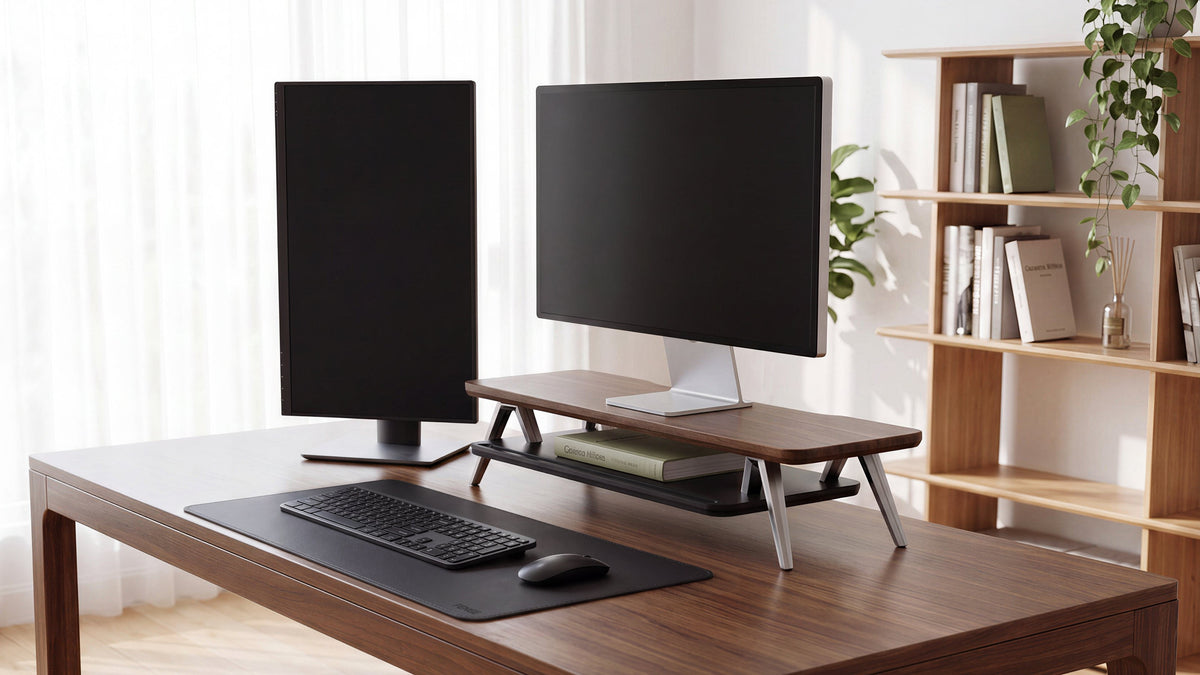
With the Bastion 510, we’ve blurred the line between office accessories and high-end furniture. We wanted to bring decorative beauty back to the workspace.
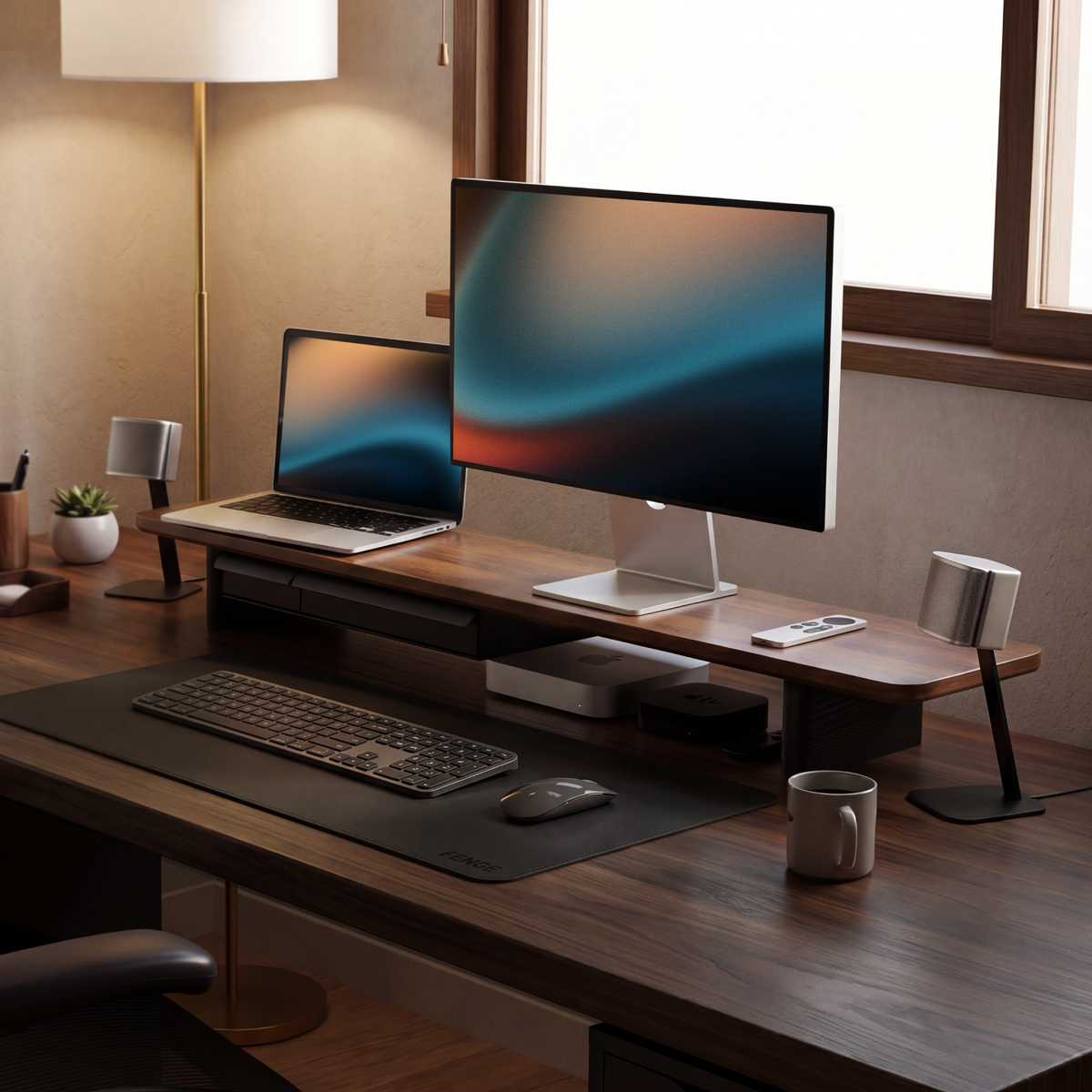
A Fusion of Textures: The Bastion 510 moves beyond a single-note experience. It boldly layers a rigid, cool frame with warm, natural grains and a soft, supple wrap. This creates a rich "tactile landscape" for your hands and eyes.
Furniture-Grade Standards: We’ve ditched the "office supply" plastic look for inspiration found in luxury home design. Every seam and bevel is held to strict tolerances, ensuring a sense of "visual hygiene" and order.
The Architecture of Space: With its commanding 42.5 x 9.8 x 6.1-inch presence, the Bastion 510 is more than a stand—it’s a piece of desktop architecture. The dual-layer storage (with a 2.8-inch clearance) provides the vertical depth needed to hide keyboards, laptops, or audio interfaces, keeping your setup clean and focused.
4. On a Budget? How to Pick "Trustworthy" Desktop Pieces
Establish a "Texture Anchor": Upgrade the item you touch most often. A furniture-grade base or tray will set the tone for everything else.
Watch the Edges: Look at the bevels. Smooth, rounded transitions usually mean higher machining precision and better attention to detail.
Skip the "High Gloss": Stick to matte or semi-matte finishes. High-shine surfaces often look cheap and are magnets for fingerprints and scratches.
Aim for "Visual Hygiene": Keep your primary materials and colors consistent. Deep, muted tones generally feel more professional and reliable than loud, bright colors.
The Bottom Line: A man’s desk is the territory of his logic and taste. Choosing a piece like the Bastion 510 is more than just an organization hack—it’s a statement about how you work and how you live.
Share:
Ritual × Power: The Psychology of Desktop Rituals for Men
One Desk, One System: An Efficient Man’s Workspace is Never Just Individual Items