

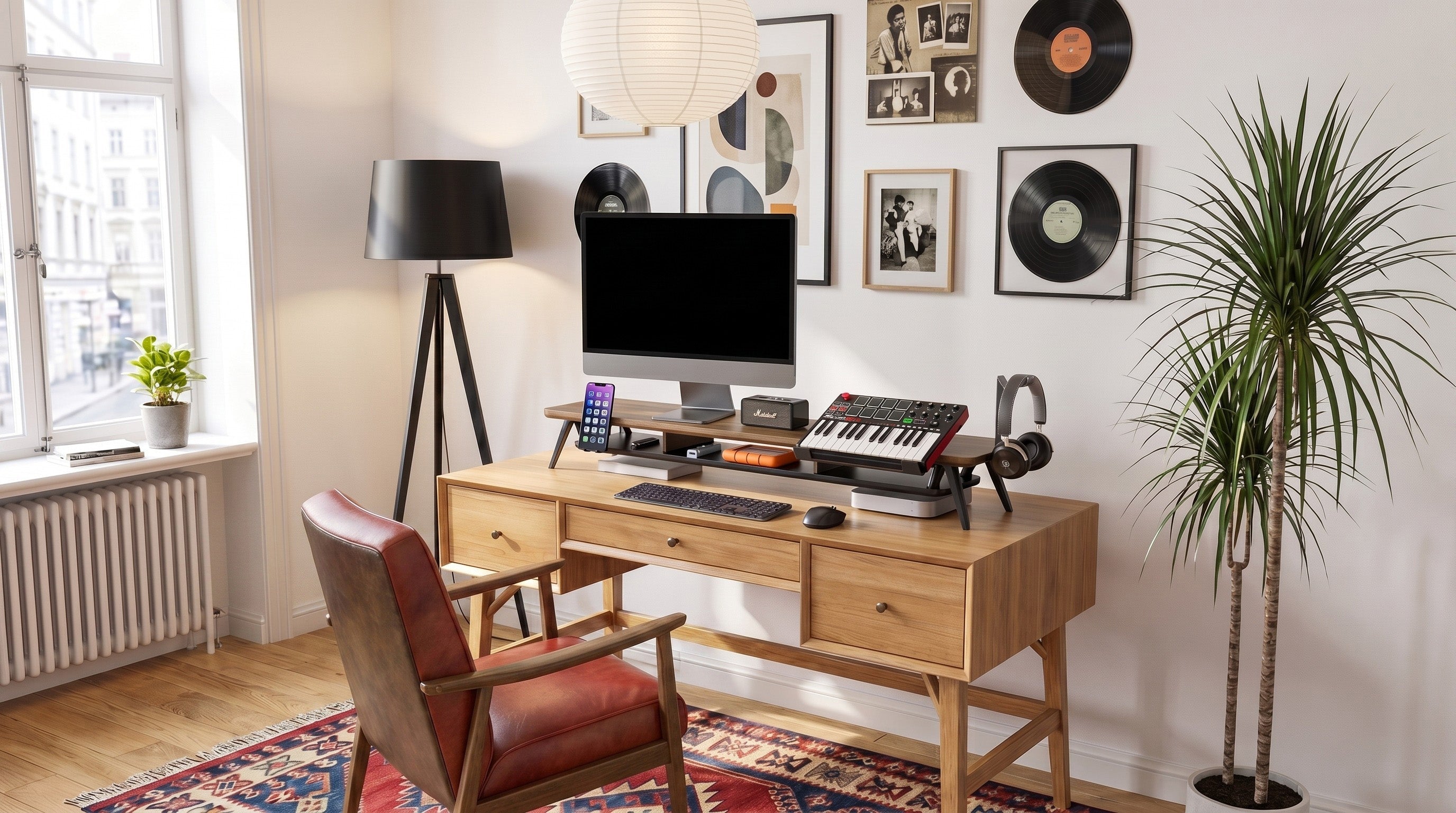
For Hi-Fi enthusiasts and peripheral users with multiple devices, buying studio monitors, a standalone DAC, or a mechanical keyboard often brings up a practical issue: the new hardware takes up a significant amount of usable desk space.
Space Consumption & Cable Management
Audio and peripheral devices are usually quite bulky. If laid flat directly on the desk, they can easily consume over 50% of your workspace. Moreover, a tangled mess of power cords, USB cables, and audio signal cables not only makes daily cleaning difficult, but physical contact between these cables can also cause electromagnetic interference, ultimately affecting the audio output quality.

Storage Solutions: Utilizing Vertical Space & Separating Cables
A logical storage approach relies on vertical space distribution:
Speaker Stands and Concealing Devices: Using desk stands to elevate speakers reduces low-frequency distortion caused by desk resonance. The freed-up vertical space beneath the speakers can be used to house a standalone DAC or headphone amplifier. Additionally, elevating the speakers aligns the tweeters directly with the listener's ear level.
Dedicated Hangers and Smart Cable Routing: Equip your peripherals with dedicated hanging accessories. When managing cables, use the desk's grommet holes to route power cables and audio signal cables through separate physical paths, keeping the desktop neat.

The FENGE Modular Solution: Functions of the Side Attachment
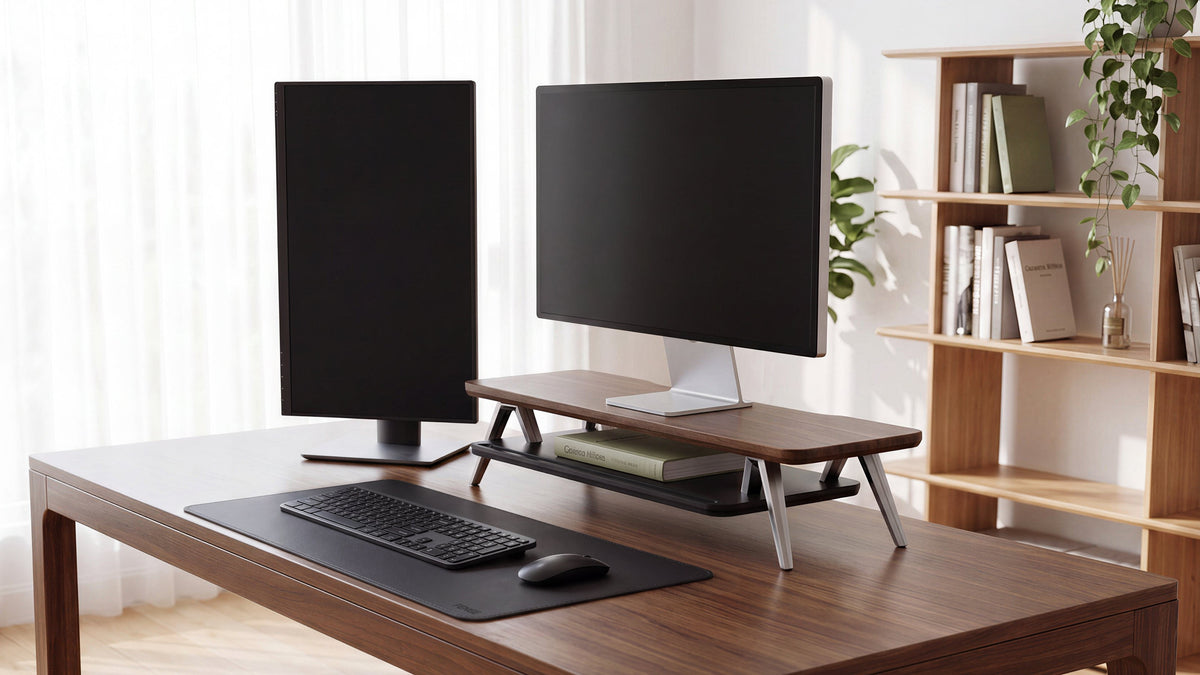
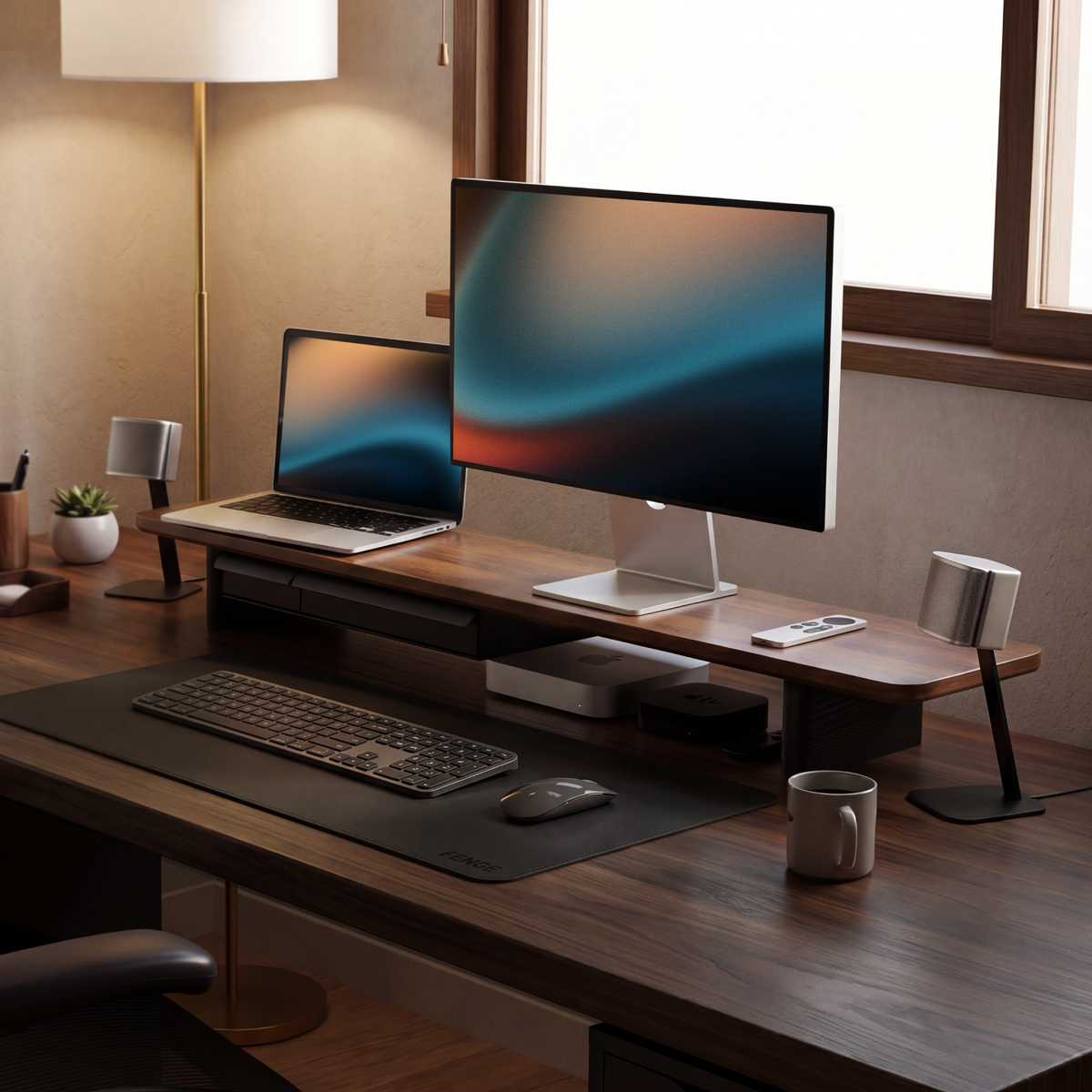
To address these spatial needs, the FENGE modular side attachment offers specific storage functions through a vertically integrated design:
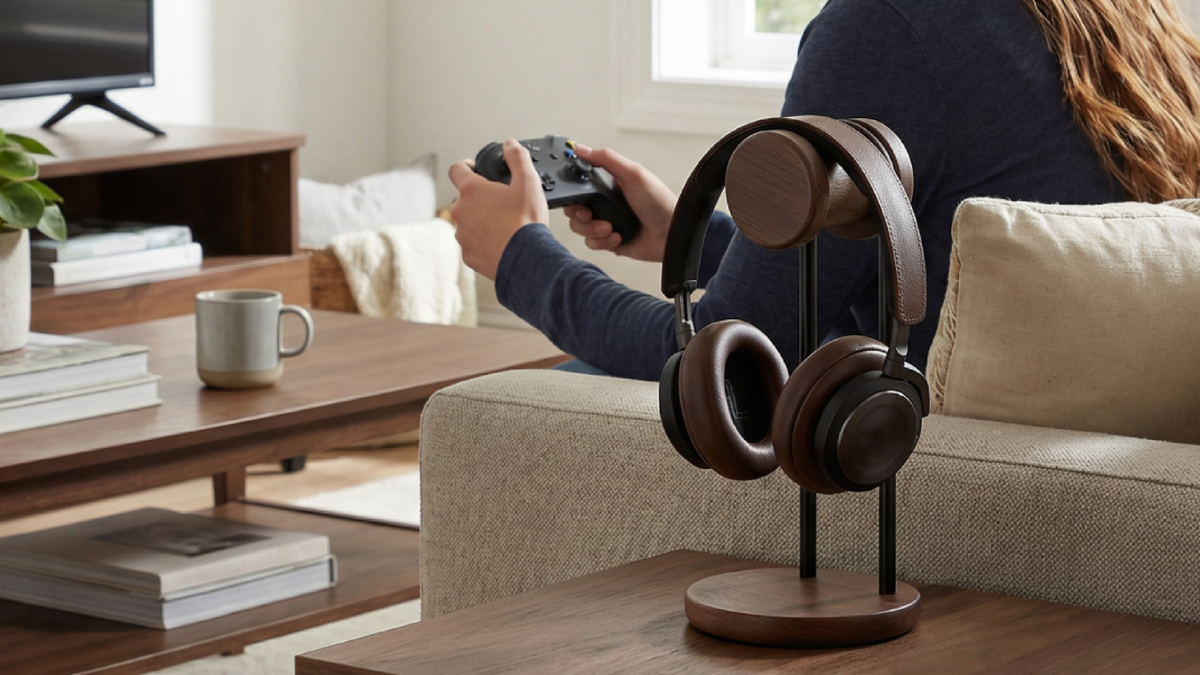
Dedicated Headphone and Phone Mounts: The attachment features an independent headphone hook and a phone stand. This allows headphones to be hung vertically off the side of the desk, preventing pressure on the earcups. Meanwhile, the phone stand keeps the screen at eye level, making it easy to check lyrics or notifications while listening to music.
Multifunctional Support Panel: The attachment includes an angle-adjustable support panel. Besides holding a laptop, it is the ideal spot for music production gear like MIDI controllers, mixers, or synthesizers. This design moves professional audio tools away from the desk's center to the side, ensuring easy access without cluttering the primary workspace.
Open Mid-Level Storage: The middle section features an open storage space. Users can store USB drives, cleaning cloths, adapters, or other small audio accessories here, keeping frequently used items within reach instead of scattered across the desk.
By using speaker stands and modular accessories like the FENGE side attachment, users can effectively categorize their audio and peripheral hardware, eliminate cable clutter, and build a highly functional, well-structured desktop setup.
Share:
The Ultimate 2026 Desktop Upgrade Guide: From Beginner to Hardcore Gamer
Earth Day 2026: Buy Less, Choose Better